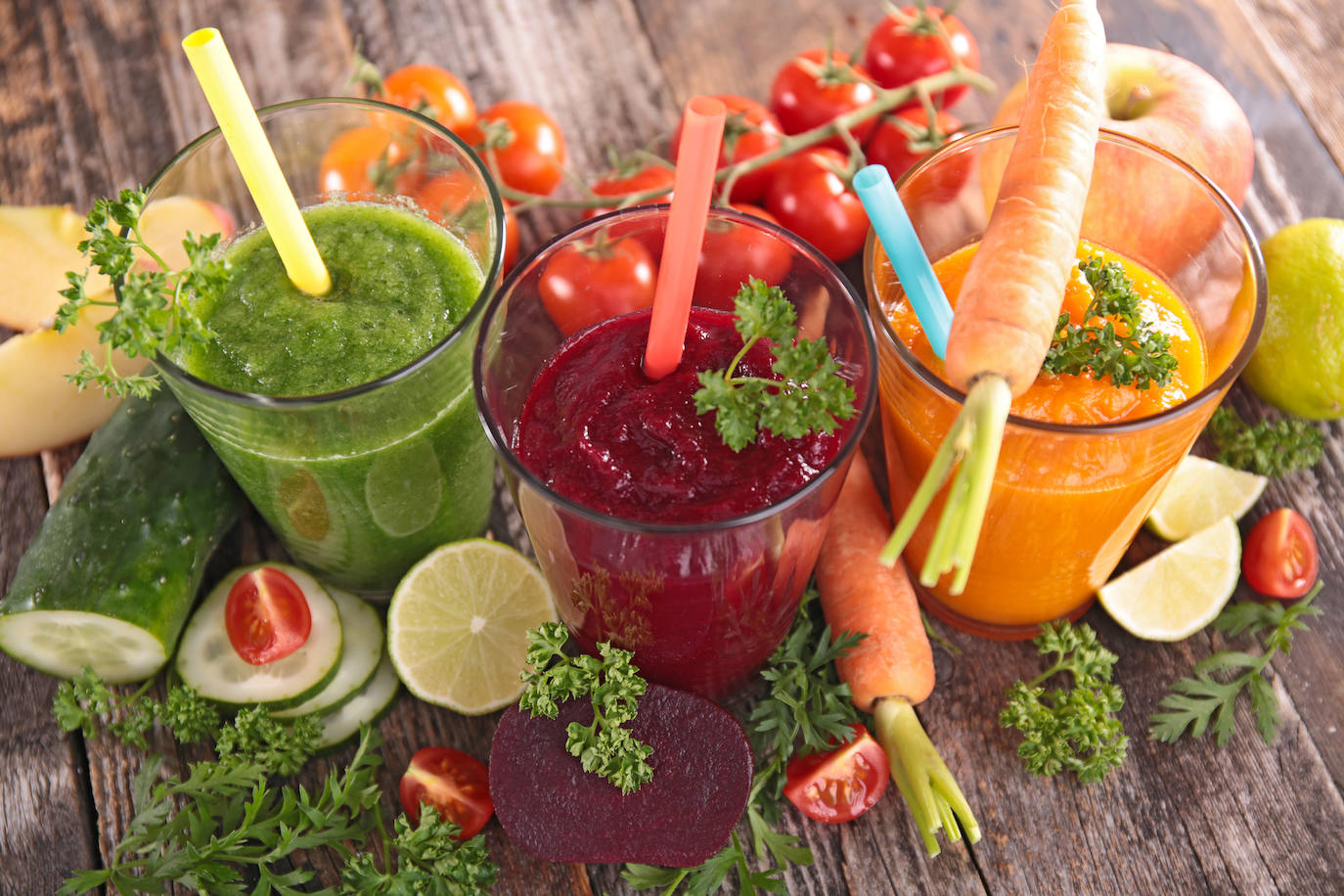
Elimina toxinas y obtén gran cantidad de vitaminas y minerales esenciales con estas bebidas detox para depurar el organismo. La mayoría de ellas se preparan únicamente con agua, frutas y verduras frescas, así que no te las pierdas.
¿En qué consiste el efecto detox?
La palabra “détox” hace referencia a una desintoxicación o limpieza del organismo, lo cual es posible a través de una alimentación saludable que propicie la eliminación de impurezas, residuos y toxinas en el cuerpo.
Es oportuno aclarar que no se trata de una dieta ni un régimen que se pueda mantener de manera prolongada. Por el contrario, debe realizarse durante un período de tiempo corto y preferiblemente bajo la supervisión de un especialista en nutrición.
Cambios en la alimentación para depurar el organismo
Si no quieres someterte a un procedimiento extremo de desintoxicación, puedes obtener los mismos resultados de manera gradual y a mediano plazo realizando algunos cambios en tu alimentación, tales como los siguientes.
Incluir más verduras en el menú
Hoy en día es tendencia el consumo de jugos y batidos verdes, una excelente alternativa para ingerir las vitaminas y nutrientes necesarios que se encuentran en las verduras y las frutas.
Opta por alimentos ricos en nutrientes, como la remolacha, la zanahoria, el pepino, el apio y el jengibre.
Reduce la ingesta de alimentos procesados
La mayoría de los alimentos que consumimos hoy en día son procesados; sin embargo, es posible conseguir productos naturales en las tiendas y supermercados, si tienes dudas al respecto, fíjate en las etiquetas de los mismos.
Consume más agua
Beber agua es la mejor manera de limpiar tu organismo. Por lo tanto, procura consumir diariamente la cantidad de agua recomendada (2 litros).
Si te cuesta llegar a esa cantidad, sustituye los jugos y gaseosas por agua. Si no te gusta su sabor, puedes añadirle algunas gotas de limón, menta o pepino, ya que funcionarán como diuréticos para facilitar la eliminación de toxinas.

Bebidas detox para depurar el organismo
A continuación, te ofrecemos una serie de bebidas ideales para desintoxicar tu organismo. La base para cada una de ellas es el agua, de modo que solo deberás conseguir el resto de los ingredientes en cada caso.
Agua con limón
Puedes ingerir esta bebida en ayunas por la mañana. Servirá para reforzar tu sistema inmune, eliminar toxinas y embellecer tu piel.
Es tan simple como cortar un limón a la mitad, extraer el zumo y agregarlo a un vaso de agua. Preferiblemente no lo endulces y bébelo a temperatura ambiente o frío.
Agua con limón, pepino y menta
Si deseas una bebida más fresca, añade menta y pepino a la preparación anterior, de esta manera obtendrás beneficios adicionales.
La menta es ideal para agilizar la eliminación de desechos, el limón regulará tu organismo y el pepino le otorgará un mejor sabor a la bebida.
Agua de limón, manzana y canela
¿Tienes algunos kilos de más? Prueba esta deliciosa bebida detox. El limón se encargará de proporcionarte energía para que hagas actividad física y te deshagas de ellos más rápido, mientras que la manzana y la canela acelerarán tu metabolismo para que sigas quemando grasa aun cuando te encuentres en reposo.
Agua con limón y chía
Esta es una de las bebidas detox más populares, cuando la semilla de chía se combina con el agua, genera una especie de gel que te proporcionará una sensación de llenura durante más tiempo. También regulará tus niveles de azúcar en la sangre, por lo que obtendrás múltiples beneficios al ingerirla.
Agua de limón y coco
Esta última receta es ideal para regular tu digestión, también te ayudará a eliminar toxinas y reducirá la inflamación abdominal para que luzcas una silueta más esbelta, entre otros beneficios.